

Most people need 1.6g to 2.2g of protein per kg of body weight per day if they’re working out regularly. For a 70kg person, that’s roughly 112g to 154g of total protein daily — and protein powder should only fill the gap your regular diet doesn’t cover, usually 1 to 2 scoops (24g–50g) a day.
If you’ve ever stood in front of your protein tub wondering “ek scoop kaafi hai ya do lena padega?” — you’re not alone. Let’s break it down properly.
Why “One Scoop for Everyone” Doesn’t Work
Your protein need depends on three things:
- Body weight – heavier body, more protein required
- Activity level – gym-goers and athletes need more than a desk-job person with light walks
- Goal – muscle building needs more protein than general maintenance
Daily Protein Requirement by Goal
| Goal | Protein Needed (per kg body weight) |
|---|---|
| General health (sedentary) | 0.8g – 1g |
| Active lifestyle / light training | 1.2g – 1.6g |
| Muscle building / strength training | 1.6g – 2.2g |
| Fat loss (preserving muscle) | 1.8g – 2.4g |
Example: A 65kg person doing regular strength training needs around 104g–143g of protein per day.
So How Much Protein Powder Should You Actually Take?
Here’s the part most people get wrong — protein powder is a supplement, not a replacement for food.
- First, calculate your total daily protein need using the table above.
- Track roughly how much protein you’re already getting from meals (dal, eggs, paneer, chicken, curd, etc.)
- Use protein powder only to fill the remaining gap.
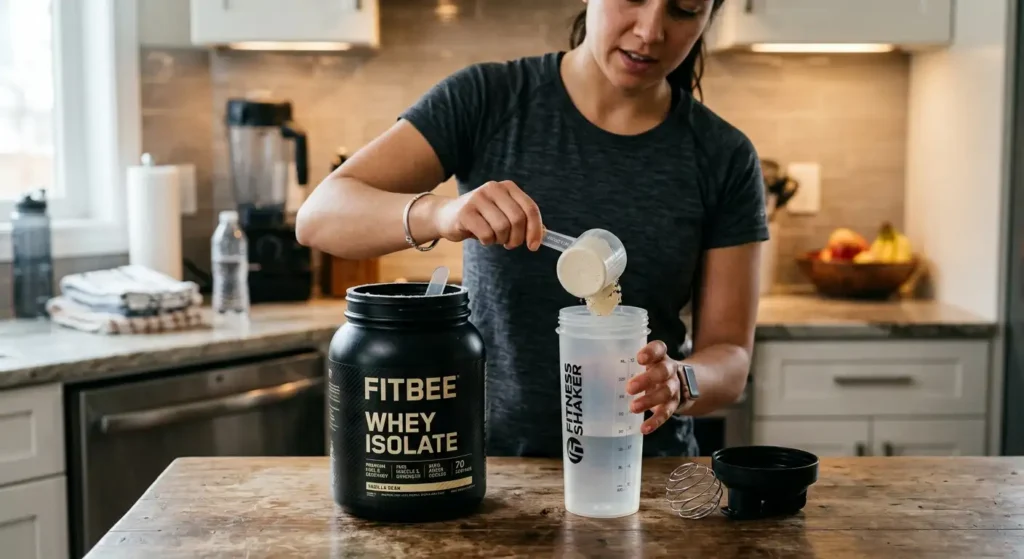
For most Indian diets, that gap is usually 1–2 scoops (24g–50g protein) per day — typically one scoop post-workout and one at breakfast or as a snack.
Best Time to Take Protein Powder
- Post-workout – within 30–45 minutes for muscle recovery
- Breakfast – if your morning meal is low in protein
- Before bed – casein-based protein can help with overnight muscle repair
Common Mistakes to Avoid
- Taking 4-5 scoops a day thinking “more is better” — excess protein doesn’t build extra muscle, it just gets used as energy or stored as fat
- Skipping meals and relying only on powder — whole food protein also brings fibre, micronutrients, and satiety
- Ignoring digestion issues — bloating usually means you need a whey isolate or plant protein instead of concentrate
FAQs
Q: Can I take protein powder without working out? Yes, but you should reduce the quantity, since your overall protein requirement is lower without intense training.
Q: Is 2 scoops of whey protein a day too much? Not necessarily — for most active adults, 2 scoops (48g–50g) alongside a protein-rich diet is well within a safe and effective range.
Q: Whey or plant protein — which one should I choose? Whey protein digests faster and is ideal post-workout. Plant protein (pea, rice blend) is great if you’re lactose intolerant or vegan.
Choose the Right Protein for Your Goal
Whether you need a fast-digesting whey isolate, a clean-label plant protein, or a budget-friendly whey concentrate — Fitbee has verified, clean-label options tested for purity.
👉 Shop Whey & Plant Protein Powders on Fitbee
Most people need 1.6g to 2.2g of protein per kg of body weight per day if they’re working out regularly. For a 70kg person, that’s roughly 112g to 154g of total protein daily — and protein powder should only fill the gap your regular diet doesn’t cover, usually 1 to 2 scoops (24g–50g) a day.
Why “One Scoop for Everyone” Doesn’t Work
Your protein need depends on three things:
- Body weight – heavier body, more protein required
- Activity level – gym-goers and athletes need more than a desk-job person with light walks
- Goal – muscle building needs more protein than general maintenance
Daily Protein Requirement by Goal
Goal Protein Needed (per kg body weight)
General health (sedentary) 0.8g – 1g
Active lifestyle / light training 1.2g – 1.6g
Muscle building / strength training 1.6g – 2.2g
Fat loss (preserving muscle) 1.8g – 2.4g