

Learning how to read a supplement label in India takes just 60 seconds once you flip past the front marketing claims to the back panel and check five numbers: protein per 100g (aim for 70g–85g+ in powders, not just a huge scoop size), complete Essential Amino Acid (EAA) and BCAA disclosure to rule out amino spiking, ingredient order (making sure Maltodextrin, palm oil, or hidden sugars aren’t near the top), FSSAI licence vs. CDSCO drug licence status, and batch-level NABL third-party lab testing for heavy metals and protein accuracy. On FitBee, every listed product is pre-screened under our Authenticity Promise so you can compare clean-label proteins, cereals, and vitamins without decoding marketing gimmicks.
If you’ve searched “how to read a supplement label in India”, “how to read a protein powder label”, “what is amino spiking”, or “is maltodextrin bad in protein powder”, you’re asking the exact questions every Indian buyer needs to ask before spending ₹1,500 to ₹4,000 on a tub.
Recent independent testing in India (including the Citizens Protein Project published in Medicine and follow-up analyses referenced by ICMR-NIN) revealed that a large share of popular protein powders sold in India failed to meet their own label protein claims, while several samples contained undeclared fillers or fungal/heavy-metal contaminants. Yet when most shoppers look up how to read a supplement label in India, they only find technical compliance documents written for manufacturers by FSSAI or legal consultancies—not a practical checklist for someone standing in front of a nutrition tub.
This guide gives you a 60-second consumer label-reading blueprint built specifically for Indian supplements, protein powders, peanut butters, and breakfast foods—plus a side-by-side comparison of clean-label, batch-tested picks available on FitBee.
1. How to Read a Supplement Label in India: Front of Pack vs. Back of Pack
The front of a supplement tub is designed by a marketing team; the back of the tub is governed by FSSAI Packaging and Labelling Regulations. Never buy based on front-of-pack badges like “100% Pure”, “Doctor Recommended”, “Zero Sugar”, or “30g Protein.”
| Front-of-Pack Marketing Claim | What It Often Hides on the Back Label | What to Check on the Back Panel Instead |
| “30g Protein Per Serving” | A massive 45g–50g scoop size (meaning only 60% of the powder is actual protein, and 40% is carbs/fillers) | Check the “Per 100g” column in the nutrition table. A clean whey concentrate or plant blend should offer 70g–80g+ protein per 100g; an isolate should offer 80g–90g per 100g. |
| “Zero Added Sugar” | High-glycemic Maltodextrin, liquid glucose, corn syrup solids, or artificial chemical sweeteners | Read the Ingredients List. If Maltodextrin or Dextrose appears, it spikes blood sugar even faster than table sugar (GI 85–110) despite legally claiming “0g sucrose.” |
| “High-Protein Peanut Butter / Cereal” | Hydrogenated vegetable oil (palm oil), refined sugar, and only 12%–15% protein | Look for 100% roasted peanuts (or clean pea/soy/whey isolate blends delivering 23g–38g protein per 100g), zero palm oil, and zero trans fat. |
| “Enriched with Creatine, Taurine & Glutamine” | Amino Spiking (Nitrogen Spiking)—counting cheap free-form amino acids toward the total protein grams | Check if the label separates True Intact Protein from added free amino acids and discloses the full Leucine (2.2g–3g/scoop) and BCAA (5g–6g/scoop) profile. |
| “Clinically Proven / Lab Tested” | A generic self-printed badge with no laboratory name, batch number, or certificate | Look for NABL-accredited third-party lab verification (such as Eurofins, SGS, or Envirocare) with a scannable on-pack QR code or published batch COA. |
New to calculating your daily protein needs? Start with our guides on how much protein powder you should take daily and how to get 100g protein a day on an Indian vegetarian diet.
2. Step-by-Step: How to Decode the Nutrition Facts Table
When you turn a supplement tub around, start with the Nutritional Information grid. Under FSSAI rules, Indian brands must list values Per 100g (or 100ml) and Per Serving, along with the % RDA (Recommended Dietary Allowance) based on ICMR-NIN dietary guidelines for Indians.
Step A: Calculate the “Protein-by-Weight Percentage”
Serving sizes vary wildly across Indian brands—one brand uses a 30g scoop, another uses a 36g scoop, and another uses a 45g scoop. To compare apples to apples:
- Formula:
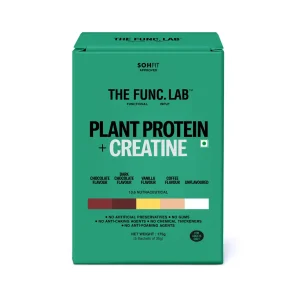
(Grams of Protein per Scoop ÷ Scoop Size in Grams) × 100 - Example 1 (Clean Formula): The Func. Lab Plant Protein delivers 27g–28g protein in a 35g scoop (
27.5 ÷ 35 = 78.5% protein by weight). - Example 2 (Filler-Heavy Formula): A budget powder claiming 24g protein in a 45g scoop is only 53% protein by weight—meaning nearly half of every scoop you drink is carbohydrates, thickeners, and flavouring.
Step B: Check “Total Carbohydrates” vs. “Added Sugars” vs. “Dietary Fibre”
- Total Sugars vs. Added Sugars: Milk-based whey naturally contains 1g–2g of lactose (milk sugar) per scoop. That is completely normal. What you want at 0g is Added Sugar (Sucrose, Glucose Syrup, High-Fructose Corn Syrup).
- Prebiotic Fibre Bonus: Clean-label brands often include 2g–6g of dietary fibre—such as Chicory Root Inulin or FOS (Fructooligosaccharides)—to feed healthy gut bacteria and keep digestion smooth.
Step C: Check % RDA on Vitamins and Minerals
- Under FSSAI Nutraceutical Regulations, daily health supplements are capped at 100% of the ICMR-NIN RDA for vitamins and minerals.
- If you see a vitamin tablet in India listing 500% to 1,500% of the daily value (for example, 1,500 mcg of Vitamin B12 or 60,000 IU of Vitamin D3), check the licence at the bottom of the pack—it is likely sold under a CDSCO Drug Licence as a therapeutic medicine rather than an everyday food supplement (see Section 5 below).
3. How to Spot “Amino Spiking” (Nitrogen Spiking) on a Protein Label
One of the most searched supplement questions when learning how to read a supplement label in India is: “How do I know if my whey protein is amino spiked?”
Why Brands Do It
Standard laboratory protein tests (the Kjeldahl or Dumas method) do not actually measure whole protein molecules—they measure total nitrogen content and multiply it by a factor of 6.25 (or 6.38 for dairy). Cheap non-essential amino acids like Glycine, Taurine, Arginine, Alanine, and even Creatine contain more nitrogen per gram than whole whey protein—and cost a fraction of the price. Dishonest manufacturers dump 3g–5g of Glycine or Taurine into a scoop to artificially inflate the nitrogen test so a 17g protein scoop tests as “25g protein” in a basic lab check.
4 Signs a Protein Powder Is Amino Spiked
- Sign 1 — Free-form amino acids listed in the “Ingredients” panel without separate dosing: If the Ingredients list reads “Whey Protein Concentrate, Cocoa, Glycine, Taurine, L-Glutamine, Creatine” and the brand does not clearly state how much protein comes strictly from whey vs. added aminos, walk away. (By contrast, transparent performance blends like Plumb Fort PLUM-WHEY explicitly disclose 30g Whey Protein + 3g Creatine separately on the panel so you know the exact breakdown.)
- Sign 2 — Missing Leucine and BCAA numbers: Genuine whey protein naturally contains roughly 22%–25% BCAAs and 10%–11% Leucine. A real 25g scoop of whey should deliver 5.5g–6.3g BCAAs and 2.5g–2.8g Leucine. If a “25g protein” powder only gives 3.2g BCAAs—or hides its amino acid table completely—it is diluted.
- Sign 3 — Suspiciously cheap pricing: Raw whey prices globally have surged over the past two years. If an unknown third-party marketplace listing offers “1kg Whey Isolate for ₹999,” the math simply does not work without fillers or spiking. Read our full guide on how to identify fake protein powder in India.
- Sign 4 — No PDCAAS disclosure on plant/fermented proteins: Single-source plant proteins can fall short on lysine or methionine unless properly blended. Always look for a Pea + Brown Rice blend (like The Func. Lab or MShield Rooted) or a Fermented Yeast + Pea + Pumpkin Seed blend (like The Healthy Codes – Code Protein) that achieves a PDCAAS score of ~1.0. See our complete yeast protein guide for how PDCAAS works.
4. Red-Flag Ingredients vs. Clean-Label Alternatives (The “No-Junk” Dictionary)
Under FSSAI labelling laws, ingredients must be listed in descending order of weight. The first three ingredients make up the bulk of what you are paying for. Use this cheat sheet to audit any Indian supplement, breakfast cereal, or snack bar:
| Ingredient Category | Red-Flag “Junk” Ingredients to Avoid | Clean-Label Alternatives Found on FitBee | Why It Matters for Your Body |
| Carbohydrate Fillers | Maltodextrin (INS 1400), Dextrose, Corn Syrup Solids, Refined Wheat Flour (Maida) | Whole-grain Oats, Sorghum (Jowar), Ragi, Pea/Rice/Soy Isolates | Maltodextrin has a glycemic index of 85–110—higher than table sugar—causing rapid insulin spikes, mid-morning energy crashes, and gut inflammation. |
| Fats & Oils (in Nut Butters & Bars) | Hydrogenated Vegetable Oil, Palm Oil, Palmolein, Interesterified Vegetable Fat | 100% Roasted Peanuts, Almonds, Cashews, Chia Seeds, Cold-Pressed Sesame/Coconut Oil | Hydrogenated oils introduce trans fats and cheap saturated fats that raise LDL cholesterol; clean nut butters need zero palm oil. |
| Sweeteners | High-Fructose Corn Syrup, Liquid Glucose, Aspartame (INS 951), Acesulfame Potassium (INS 950) in excess | Monk Fruit Extract, Natural Stevia Leaf, Zero-Calorie Erythritol, Dates | Natural zero-glycemic sweeteners like Monk Fruit and Stevia give sweetness without blood sugar spikes or bitter chemical aftertastes. |
| Thickeners & Gums | Carrageenan (INS 407), excessive CMC (INS 466), synthetic anti-caking agents | Inulin (Chicory Root Fibre), Guar Gum (in minimal quantity), Soy/Sunflower Lecithin | Carrageenan is linked to intestinal irritation and bloating; Chicory Root Inulin acts as a beneficial prebiotic fibre. |
| Digestive Support | Zero enzymes in heavy dairy/legume powders (leading to gas and stomach heaviness) | DigeZyme / Papain, Pepsin, Bromelain, Lactase, or Ayurvedic herbs (Ginger, Fennel, Cinnamon) | Added digestive enzymes break down lactose and plant peptides rapidly, preventing the infamous “protein bloat.” |
| Banned Substances | PABA (Para-aminobenzoic acid), DMAA, undeclared steroids or prohormones | 100% FSSAI-Permitted Nutraceutical Ingredients & WADA-compliant formulas | FSSAI explicitly prohibited PABA and 14 unverified extracts in nutraceuticals; always check for clean, compliant disclosures. |
5. FSSAI Food Licence vs. CDSCO Drug Licence: The Indian Vitamin Trap
One of the biggest blind spots in Indian wellness—highlighted in recent AI search visibility audits (GetXEO Nutraceuticals Report)—is that most Indian shoppers cannot tell whether a vitamin tablet is a daily food supplement or a pharmaceutical drug.
When you search Google or ask an AI assistant for “best Vitamin D, Vitamin B12, Calcium, or Iron supplement in India”, the top results often mix pharmaceutical medicines (like Neurobion Forte, Uprise D3 60K, Orofer XT, or Shelcal 500) with everyday nutraceuticals.
| Feature | FSSAI Nutraceutical / Health Supplement | CDSCO Licensed Drug (Pharmaceutical Medicine) |
| Regulatory Body | Regulated by FSSAI under the Food Safety and Standards (Health Supplements, Nutraceuticals) Regulations | Regulated by CDSCO under the Drugs and Cosmetics Act |
| How to Spot It on the Label | Carries a 14-digit FSSAI Lic. No. and the statement “Health Supplement / Nutraceutical — Not for Medicinal Use” | Carries a Mfg. Lic. No. (Drug Licence), often with an Rx symbol or pharmacopoeia tag (IP / USP) |
| Dosage Level | Formulated within 50%–100% of ICMR-NIN Daily RDA for safe, long-term daily nutritional maintenance | Often contains therapeutic mega-doses (e.g., 60,000 IU Vitamin D3 or 1,500 mcg synthetic Cyanocobalamin) meant for short-term clinical deficiency correction |
| When You Should Use It | Everyday nutritional gaps, immunity, energy, hair/skin wellness, and active recovery | Diagnosed clinical deficiency or anaemia under direct supervision of a physician |
The FitBee Rule: If a blood test shows severe clinical anaemia or Vitamin D deficiency, consult your doctor for a short-term medical protocol. If you want a safe, daily 100% RDA clean-label multivitamin, B-Complex, or plant-based iron booster for ongoing energy, hair, and immunity, always choose an FSSAI-verified nutraceutical with disclosed elemental mineral forms (such as Magnesium Glycinate or Citrate rather than cheap Magnesium Oxide).
6. Clean-Label Scorecards: Compare Verified Products on FitBee
Because knowing how to read a supplement label in India is easiest when you look at real examples, here is how top-rated products across Protein, Breakfast, Peanut Butter, and Daily Wellness on FitBee stack up on our clean-label checklist.
(Prices and ratings as listed on FitBee in October 2026; check individual product pages for current offers.)
A. Clean-Label Protein Powders (Whey, Plant & Fermented Yeast)
| Product on FitBee | Protein Source & Type | Protein & BCAAs / Serving | Sweetener & Added Sugar | Digestive & Lab Highlights | Price (MRP) & FitBee Rating |
| The Func. Lab Plant Protein (Dark Chocolate, 500g / 1kg & 6-Sachet Travel Pack) | Pea + Brown Rice Isolate Blend (100% Vegan) | 26g–28g Protein per 35g scoop | 0g Added Sugar (Naturally sweetened) | Added Digestive Enzymes; zero artificial thickeners or gums; travel sachets available at ₹570 | ₹1,082 (MRP ₹1,250 for 500g) · ⭐ 4.61/5 (28 reviews) |
| The Healthy Codes – Code Protein (Chocolate) | Fermented Yeast + Pea + Pumpkin Seed Isolates | 24g Protein, 5.2g BCAAs (PDCAAS ~1.0) | 0g Added Sugar (Sweetened with Monk Fruit) | Bio-fermented for zero bloating; 100% clean label, no fillers | ₹1,376 (MRP ₹1,529) · ⭐ 4.55/5 (11 reviews) |
| The Func. Lab Grass-Fed Whey Concentrate (Coffee / Chocolate, 500g & 1kg) | Grass-Fed Whey Protein Concentrate | 25g–26g Protein, 5.98g BCAAs per 35g scoop | 0g Added Sugar, no preservatives | Fortified with gut-friendly Digestive Enzymes for rapid absorption | ₹1,899 (MRP ₹2,150 for 500g) · ⭐ 4.58/5 (26 reviews) |
| Open Secret Daily Plant Protein (Chocolate, 500g) | 4-Protein Blend (Pea, Rice, Mung & Guar) | 24g Protein (Only 122 kcal per serve) | 0% Refined Sugar, zero fillers | Infused with Ayurvedic Digestive Blend (Ginger, Fennel, Cinnamon); third-party lab tested | ₹1,399 (MRP ₹1,999) · ⭐ 4.61/5 (32 reviews) |
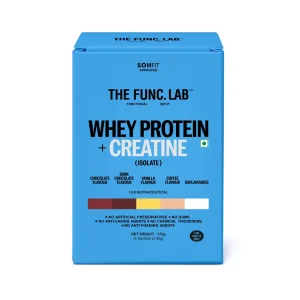
| Plumb Fort PLUM-WHEY (Chocolate, 1.3kg / 2.3kg) | Whey Protein Concentrate + Pure Creatine | 30g Protein + 3g Creatine per scoop | 0g Added Sugar | 3X Enzyme Blend (Papain, Pepsin, Bromelain) for zero stomach heaviness | ₹2,700 (MRP ₹5,999 for 1.3kg) · ⭐ 4.82/5 (23 reviews) |
B. Clean-Label Breakfast, Nut Butters & Daily Wellness Supplements
| Product on FitBee | Category | Clean-Label Macro / Active Profile | What’s Left Out (“No-Junk” Check) | Price (MRP) & FitBee Rating |
| Proskii 38g Plant Protein Cereal (Double Chocolate / Mango Munch / Peanut Butter, Pack of 2) | Healthy Breakfast | 38.23g Protein per 100g (~15g–18g per 40g bowl) from Soy + Pea Isolate & Jowar | True 0g Added Sugar (Erythritol + Stevia); no corn syrup or maltodextrin; On-pack QR code for live NABL lab report | ₹899 (MRP ₹998 for Pack of 2) · ⭐ 4.76/5 (23 reviews) |
| Raiville’s High-Protein Peanut Butter (Mawa Fudge 30% / Mango Chia 27% / Cookie & Cream 24%, 1kg) | Healthy Breakfast / Spreads | 24g to 30g Protein per 100g; slow-digesting roasted peanut protein + Himalayan minerals | No Palm Oil, 0% Trans Fat, 0% Cholesterol, no artificial preservatives | ₹449–₹499 (MRP ₹649–₹699 for 1kg) · ⭐ 4.79/5 (20 reviews) |
| Nuvanos ZenRest Sleep & Stress Gummies (Blueberry, 30 Gummies) | Wellness Lab (Sleep & Stress) | Ashwagandha + Magnesium Glycinate + L-Theanine + Zinc + Chamomile | Melatonin-Free, 100% Vegan, natural flavour/colour; every batch 3rd-party lab tested for heavy metals & pesticides | ₹545 (MRP ₹589) · ⭐ 4.60/5 (21 reviews) |
| The Func. Lab Daily Electrolytes (Assorted 15 / 30 Sachets) | Gut & Hydration | Sodium, Potassium & Magnesium for rapid cramp & fatigue relief | 0g Added Sugar, no preservatives, no artificial colours (unlike high-sugar commercial sports drinks) | ₹449 (15 sachets) / ₹950 (30 sachets) · ⭐ 4.55/5 (34 reviews) |
| Pureluxe & TeinPro 20g Protein Bars (Caramel Cashew / Caffinity / Butterscotch) | Healthy Snacks | 20g Multi-Source Whey & Casein Protein + High Prebiotic Fibre (FOS/Inulin) & Ashwagandha | 0g Added Sugar, gluten-free, trans-fat free, zero artificial preservatives | ₹419–₹900 (Packs of 4 to 6) · ⭐ 4.95/5 (20 reviews) |
Want to compare more breakfast or hydration options? Read our deep dives into the best oats in India for weight loss and electrolytes in India (when you actually need them).
7. How to Verify Supplement Authenticity & Report Fake Products in India
Counterfeit tubs are one of the biggest risks in Indian sports nutrition. Before you break the inner seal on any supplement, run this 5-point verification check:
- Verify the 14-digit FSSAI Licence Number: Visit the official FSSAI FoSCoS portal and enter the manufacturer’s or marketer’s 14-digit FSSAI number printed on the back label to confirm the licence is active and matches the brand name.
- Scan the Batch QR Code / Scratch Code: Leading clean-label Indian brands (such as Proskii, Nuvanos, and The Func. Lab) provide batch-level NABL laboratory certificates verifying protein percentage, heavy metals (lead, arsenic, mercury, cadmium within safe limits), and microbial safety.
- Inspect the Lot Number, MRP Sticker & Inner Induction Seal: On imported or domestic tubs, ensure the batch number and expiry date are laser-etched or cleanly printed—never pasted over an older label—and check that the inner heat-induction foil seal is completely intact.
- Buy Only From Direct Brand-Authorised Marketplaces: Open third-party marketplaces often commingle inventory from dozens of unverified resellers. Read our full comparison on where to buy genuine supplements in India (FitBee vs. Amazon, Flipkart & Brand Websites) and see how our direct-from-brand sourcing works on the FitBee Authenticity Promise page.
- Know How to Report a Suspicious or Adulterated Product: If you ever receive a mislabelled or counterfeit food supplement elsewhere, you can file an official grievance directly with the regulator via the FSSAI Food Safety Connect portal or call the National Consumer Helpline at 1915 (consumerhelpline.gov.in).
Frequently Asked Questions (FAQs)
1. How do I read a protein powder label in India?
Start with the Per 100g column on the back nutrition table (look for 70g–85g+ protein per 100g), check the Ingredients list to confirm whole protein (whey concentrate/isolate, pea/rice isolate, or fermented yeast) is the #1 ingredient with zero Maltodextrin, verify the BCAA (5g+) and Leucine (2.5g+) profile, and confirm a valid 14-digit FSSAI licence and third-party lab test.
2. What is amino spiking in protein powder, and how can I spot it?
Amino spiking (or nitrogen spiking) is when a manufacturer adds cheap free-form amino acids like Glycine, Taurine, or Arginine to inflate the nitrogen test results of a protein powder. You can spot it if free amino acids appear in the ingredient list without separate gram disclosures, or if a “25g protein” scoop lists less than 5g of naturally occurring BCAAs.
3. Why does a supplement say “Zero Added Sugar” but still spike blood sugar?
Many Indian health drinks and cereals replace table sugar (sucrose) with Maltodextrin or dextrose. Because Maltodextrin is technically a polysaccharide rather than a simple sugar, brands legally print “Zero Added Sugar” on the front—even though Maltodextrin has a glycemic index of 85–110, which spikes blood glucose faster than table sugar. Always check the ingredient list for Maltodextrin.
4. Which supplement ingredients are banned by FSSAI in India?
FSSAI prohibits steroids, prohormones, DMAA, and specific unverified compounds—including PABA (Para-aminobenzoic acid) and 14 restricted botanical/chemical extracts—under India’s Nutraceutical Regulations. Always choose FSSAI-licensed supplements with full ingredient disclosure.
5. What is the difference between an FSSAI health supplement and a pharmacy vitamin in India?
An FSSAI health supplement carries a 14-digit FSSAI food licence and provides nutrients within 100% of the daily ICMR-NIN Recommended Dietary Allowance (RDA) for safe everyday use. Many popular pharmacy vitamins (like Uprise D3 60K or Neurobion Forte) are manufactured under a CDSCO drug licence with high therapeutic doses meant for clinical deficiency treatment under a doctor’s care.
6. Why do some protein powders cause bloating and gas, and what should I look for on the label?
Bloating is usually triggered by lactose in unfiltered whey concentrate, FODMAPs in raw legume powders, or cheap thickeners like carrageenan (INS 407). If you have a sensitive stomach, look for labels that include a Digestive Enzyme blend (Lactase, Papain, Bromelain, Pepsin), Whey Protein Isolate, or Fermented Yeast / Pea-Rice Protein (like The Func. Lab or The Healthy Codes on FitBee).
7. What does “NABL lab-tested” mean on an Indian supplement label?
NABL (National Accreditation Board for Testing and Calibration Laboratories) is India’s official accreditation body for laboratories. When a brand states its batch is NABL lab-tested, an accredited independent lab has verified that the actual protein content matches the label claim and that heavy metals, aflatoxins, and microbes are within safe limits.
8. How much protein per 100g is good in peanut butter and breakfast cereal?
Regular commercial peanut butter has around 20g–25g protein per 100g (often diluted with sugar and palm oil), while high-protein nut butters on FitBee (like Raiville’s Mawa Fudge) deliver up to 30g protein per 100g with zero palm oil. For breakfast cereals, standard cornflakes have only 7g–8g protein per 100g, whereas clean high-protein cereals (like Proskii) deliver 38g protein per 100g with zero added sugar.
The FitBee Take
You shouldn’t need a degree in food chemistry to buy a tub of protein powder, a jar of peanut butter, or a daily multivitamin in India.
The real question isn’t “Which brand has the biggest celebrity on the tub?”—it’s “Does the back label match the front label, and is there an independent lab test to prove it?”
That is why we built FitBee — India’s No-Junk Zone:
- Explore FitBee’s Protein Station (Whey, Isolate, Plant & Yeast Protein)
- Browse Zero-Sugar Healthy Breakfast (38g Protein Cereals, Oats & 30% Protein Nut Butters)
- Check out Gut & Hydration and The Wellness Lab
- Not sure where to start? Take the 30-second FitBee Quiz on our homepage or read our FitBee Authenticity Promise.
Disclaimer: This article is for educational and informational purposes only and is not a substitute for professional medical or dietary advice. Always consult a qualified physician or registered dietitian before starting any new dietary supplement, especially if you have a medical condition, are pregnant, or take prescription medication.
Shop Lab-Tested Protein Station (Whey, Isolate & Plant) on Fitbee
Every product on Fitbee is 100% authentic, FSSAI-verified, and shipped directly from the official brand with zero middlemen.


[…] ashwagandha in India, reading the back supplement panel is critical. As explained in our guide on how to read a supplement label in India, brands often print “1000mg Magnesium” on the front label while hiding that it is […]